

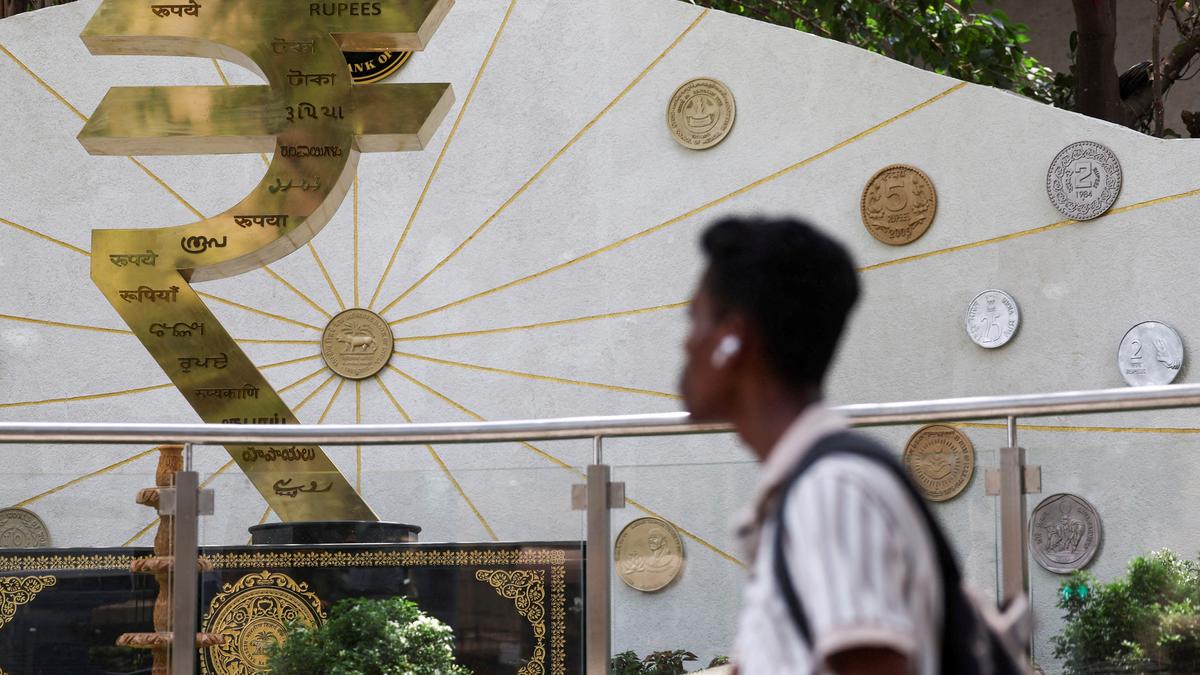
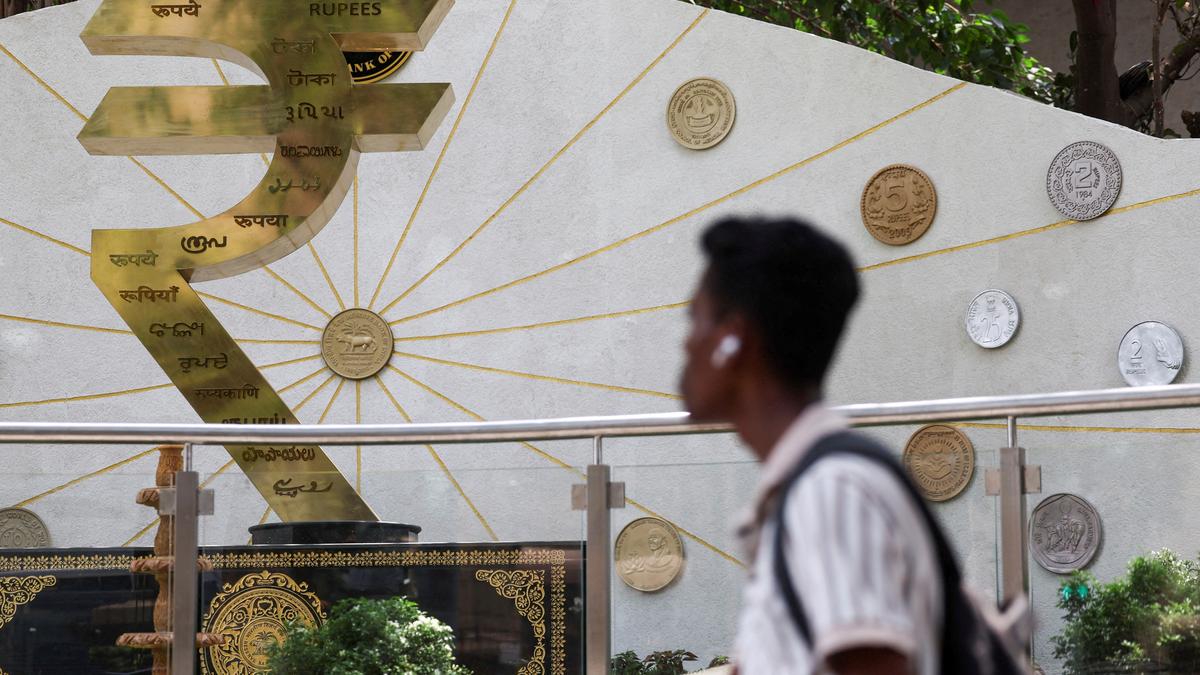
RBI on money: infusing liquuidity to support financial stability without flooding the system | Photo credit: Francis Mascarenhas
The monetary policy committee has unanimously decided to reduce the policy rate by 0.25 percent, which reduced it to 6 percent, while changing its posture of neutral to accommodation. It is important to note that the governor of the Bank of the Reserve of India, Sanjay Malhotra, has clearly emphasized that the well -off position aims to be a signal for interest rates and should not be directly interpreted as a reflection of the prevailing liquidity conditions. By separating the address of the policy rate from the liquuidity signals, the Central Bank aims to maintain the flexibility to navigate in short -term rates to guarantee the stability of the financial market.
The signaling of the posture of monetary policy reflects the intention of the Central Bank and its long -term perspective on macroconic foundations. On the contrary, the strategy, particularly with respect to liquidity management, is inherently in the short term and tactical, intended to complement the broader policy position. The liquuidity operations are carried out within a defined operational framework that has been embedded by the prevailing economic environment.
However, in the short term, the tool used in the liquuidity strategy can diverge from the broader position without undermining the general objectives. As the governor clearly articulated, a “housed” position implies that MPC is considering only two options: keeping the status quo or the cutting rates. The tool used to follow the liquuidity strategy can still vary, depending on the evolutionary conditions. For example, sustained foreign and Sizeexa investment tickets may need sterilization, or through open market operation tools (OMO). And the sale of OMO, in general, is perceived as a tight liquidity measure. Similarly, liquuidity could be adjusted to ensure that short -term rates serve as a railing against excessive volatility in rupee.
While these actions may seem contradictory to the position accommodated at first glance, in fact they are totally consistent with the mandate of the Central Bank: safeguarding the stability of the financial market and preserving the stability of prices in the economy in general.
Daily adjustment
A change in RBI’s liquuidity operations begged in January, with the reinduution of the daily auctions of the liquuidity adjustment center. The Central Bank will continue to intervene through a variable rate repo (VRR) or inverse variable rate (VRRR), when necessary. According to this framework, the RBI now performs variable rate auctions with amounts announced on a T-1 base. This marks a deviation from the previous practice of the biweekly term repository auctions, which was based on two key assumptions: the requests for reserve reserve ratio (CRR) in Quinconal are maintained in a biweekly and second, and second, in a former angel, contributing to the development of a more efficient term money market.
Banks now have the daily access guarantee to liquidity, although not at a fixed rate/repo rate.
This change in market microstructure effectively addresses the intertemporal dilemma banks that are previously faced: whether to request borrowing through term money auctions or resorting to the interbank market or through the most expensive daily marginal installation ‘.
In essence, this tactical movement relieves pressure on daily liquuidity management and creates a more support environment for the softest interest rates.
Liquidity strategy
Now to understand the recent strategy and liquuidity action of the RBI. According to the monetary policy report, there has been a significant reduction in liquidity or ₹ 8.2 Lakh Crore, driven by two autonomous factors: net currency sales that amount to ₹ 5.8 Lakh Crore and an increase in currency in ₹ 2.4 Lakh. In response, the RBI injected liquuidity through multiple channels: ₹ 2.84 Lakh Crore through omo purchases and ₹ 2.2 Lakh million rupees through long -term Forex, purchase/sale of swaps in total of around ₹ 5 Lakh Crore. The deficit was managed through a reduction of government balances and term repository auctions. In addition, the RBI announced ₹ 1.2 Lakh crore in purchases of OMO for April 2025.
In essence, this large -scale liquidity infusion is aimed at compensating the autonomous exits, instead of creating a surplus such as ultravioles liquidity conditions seen to the king of pandemic. This indicates a calibrated and agile approach, which pushes the appropriate license to support the financial floods that flood the system, participately crucial in the current environment of the alably external volatility and the need for captivity for cauts for cauts.
Now the question is how the credit and deposit will be shaped to the fiscal year 26. A loan relationship to high deposit (LDR) and the current liquuidity coverage ratio (CSF) would continue to contribute the growth of the loans of the banks and converge them towards the growth of the deposits. To guarantee a healthy transmission, the lichence of the banking system must be in surplus. This would relieve pressure on deposit rates and reduce the marginal cost of funds based on funds.
IND-RA estimates the growth of the system deposit or 12-13 percent year-on-year for fiscal year 2016, as in fiscal year 2015, with a competitive intensity to obtain low cost deposits ‘current account, savings account’. Since the LDR system is higher in the last five years with deposit rates at 80 percent and a term near the peak or peak, it is likely that the dependency of increasing infrastructure bonds will continue in the short term. In addition, it is likely that the dependence of bulk deposits increases whether growth in granular deposits remains limited.
In terms of credit demand, a wide base capital spending has been lacking for some time; And, amid uncertainties, it is unlikely to improve. However, sectors such as iron and steel, cement, data centers, logistics and renewable energies show a healthy capex, but given its modular nature, debt dependence extends.
(The writer is director, India Ratings & Research – a Fitch Group company. Opinions are personal)
More like this
Posted on April 13, 2025