

The decision of the administration of US President Donald Trump to suspend foreign aid and close the USAID agency has sent shock waves throughout the development industry. In 2024, almost a third of the $ 41 billion in the foreign aid of the United States went to Africa, helping to support several sectors from medical care to education and sanitation.
But as help organizations sound alarm alarms and government officials that are approved on suspended programs, we lack the biggest image: the continuous dependence of Africa of foreign aid is an choice, it is not a necessity. Our continent is at the top of some of the largest reserves in the world of the same minerals that will feed the future, but we are still trapped in a help depth cycles. It’s time to change that.
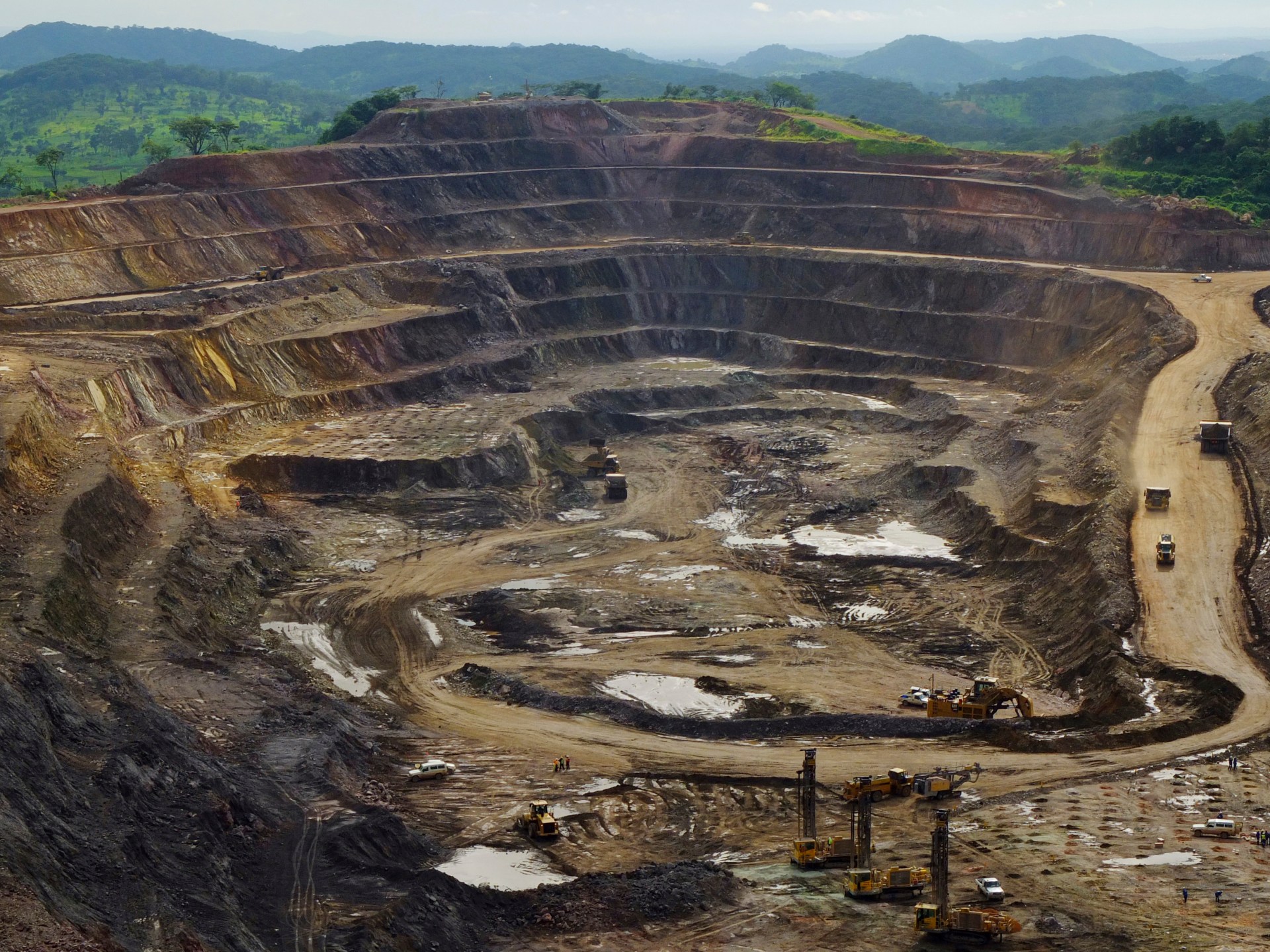
Let’s be clear about what is at stake. The Congo Democratic Republic supplies 70 percent of the world cobalt, the essential ingredient in electric vehicles. South Africa produces 75 percent of the world’s platinum and 50 percent of the paladium. Mozambique and Madagascar have some of the largest graphite deposits worldwide. Zimbabwe has Larst Cesium deposits, a critical metal used in GPS and 5G systems.
More than only rocks and metals, these are the keys to the global clean energy transition. Each electric vehicle, solar panel and wind turbine depends on the minerals that Africa has in abundance.
However, here we are still exporting raw materials such as vassals of the colonial era while committing to the help of the same countries that benefit from our resources. Mathematics are exasperating: we sell raw cobalt for $ 26-30 per Kg (2.2 lb), while processed battery degree materials obtain $ 150-200. We are giving more than 80 percent of the value chain to foreign processors and manufacturers. This is not just a baby business, it is economic negligence.
The global battery market will only reach $ 250 billion by 2030. The renewable energy sector is growing at dizzying speed, with solar facilities that increase by 26 percent annually.
Clearly, the mineral riches of Africa represented the greatest economic opportunity of our generation. But instead of positioning ourselves to capture this value, we are discussing how to patch the holes left by suspended help programs.
Critics will say that we lack infrastructure, experience and capital to process these minerals ourselves. They are right, for now. But this is precisely where we should invest our resources and focus our political will. The Chinese understood this decades ago, so they have poured almost $ 58 billion in ensuring control of critical mineral supply chains. They saw the future while we were busy filling requests for help.
The solution is not complicated, he thought it is challenging. We need to build processing facilities, not just extraction sites. We need to establish special economic zones focused on the mineral benefit, not just export terminals. We need to invest in research and development facilities that can adapt and improve processing technologies. The most important thing, we must think and act regionally.
Imagine an initiative of battery materials from the Development Community of Southern Africa, where countries group resources and experience to build integrated value chains. Imagine a framework of cooperation of rare earth elements of East Africa that converts our mineral wealth into high -tech manufacturing capabilities. These are not pipe dreams: they are lost opportunities every day that we continue business as usual.
Environmental critics will say that mining is dirty and destructive. They are not wrong about the risks, but they are wrong about the solution. The answer is not to leave our minerals on the ground; It is to establish our own high standards for sustainable extraction and processing. We can build a mining and processing industry that protects our environment and benefits our communities. We must, because the alternative is to see foreign companies do it in their own way while we deal with the count.
The suspension of help has created a human suffering that cannot be ignored. HIV treatment programs, educational initiatives and food security projects are at risk. But if these programs are essential, and many of them are, why should we deepen the political whims of foreign governments to finance them? Our minerals would pay these programs many times once we capture their total value.
What we need now is political courage and the unity of purpose. We need leaders who can look beyond the next electoral cycle and imagine an Africa that finances their own development. We need business leaders who can build processing facilities instead of export terminals. We need educational institutions that train chemical engineers and metallurgists instead of help programs administrators.
The current crisis should serve as our catalyst for transformation. Every dollar of suspended aid should lead us to capture a value ten times of our minerals, and each slight diplomat must strengthen our resolution to build African solutions. The choice is clear: we can spend the next decades registering aid budgets, or finally we can take control of our destination through the strategic development of our mineral wealth.
It is time for Africa to transform from the world raw material store in manufacturing power. By turning our mineral wealth into a lasting prosperity, we can make foreign aid what should have been all the time: unnecessary.
The opinions expressed in this article are typical of the author and do not necessarily reflect the editorial position of Al Jazeera.