





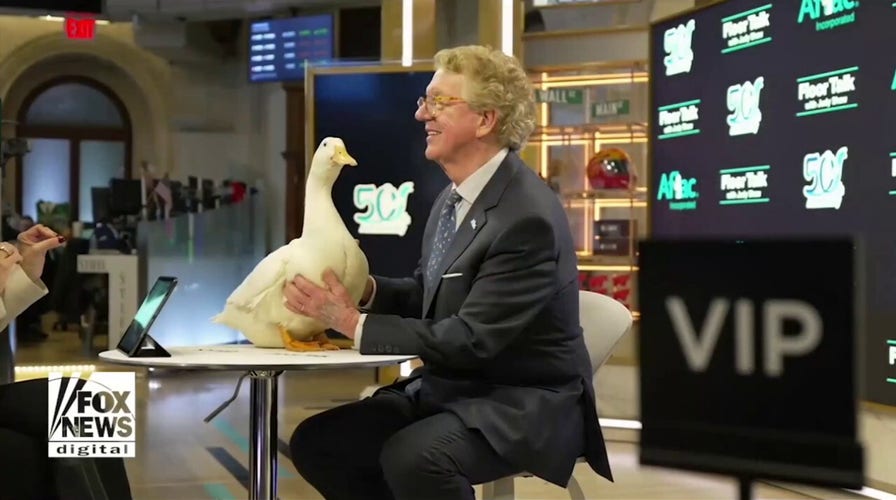

The AFBAC Duck turns 25 years old
It is the 25th birthday of the United States favorite spokes-Duck, which represented a change in the way insurance companies are marketed.
Who knew that a duck that sounds fun would be so famous and successful?
No, we are not talking about Daffy or Donald. Aflac, the favorite spokes-Duck of the United States, is turning 25, and the company is looking back in all commercials that made it famous. From his humble start in commercials expressed by Gilbert Godfried, to the floor of the New York Stock Exchange, Aflac (as the official duck is called) has become a powerful corporate pet in the last quarter of a century. And the company’s CEO, Dan Amos, says that everything starts with two advertising executives sitting in a park bank, but anyone became the biggest commitment of their career.
“When he ran and saw him,” Amos told Fox News: “I realized that I had all my career in a damn duck! But today, millions of people through the United States know the Afgac Duck.”
Amos accredits the humor and spontaneity of AFBRAC for its longevity and popularity. But it’s not just laughing. He says the company could use humor to take advantage of an important complaint among insurance customers at that time.
“They always said three times: Aflac! Afbac,” says Amos, “and what we discovered was that consumers were also frustrated that hide or list.” This realization ended up changing the face of advertising, showing that “serious” companies such as insurance companies can also have a lighter side.
And it worked. In three years, affac sales doubled and the recognition of names shot 10 percent to 90 percent. And now the duck is helping beyond the final result. The processes of your sale are used to finance the center of riveting disorders and blaodos in Atlanta. Until now, more than $ 200 million have been raised.
The company also produces a special robotic version of the duck that helps to calm patients with infant cancer and falciform cells, which distributes free in treatment centers in the country. AFFAC has given almost 40,000 of those special ducks, with plans for many more in the coming years. Amos says that everything is part of a culture of philanthropy throughout the company. “As you can imagine, when the child’s calm, the parents are calm,” he says. “And so, it works hand in hand to finally improve things.”


